
Wind Mitigation Roof Upgrades That Earn Insurance Credits
Florida law (Fla. Stat. 627.0629) makes insurers give discounts for roof covering performance, roof strength and roof-to-wall strength. Since October 2023, insurers have also had to describe those discounts on their websites. Each insurer sets its own percentages; there's no statewide figure. These are the roof items the OIR-B1-1802 form scores.
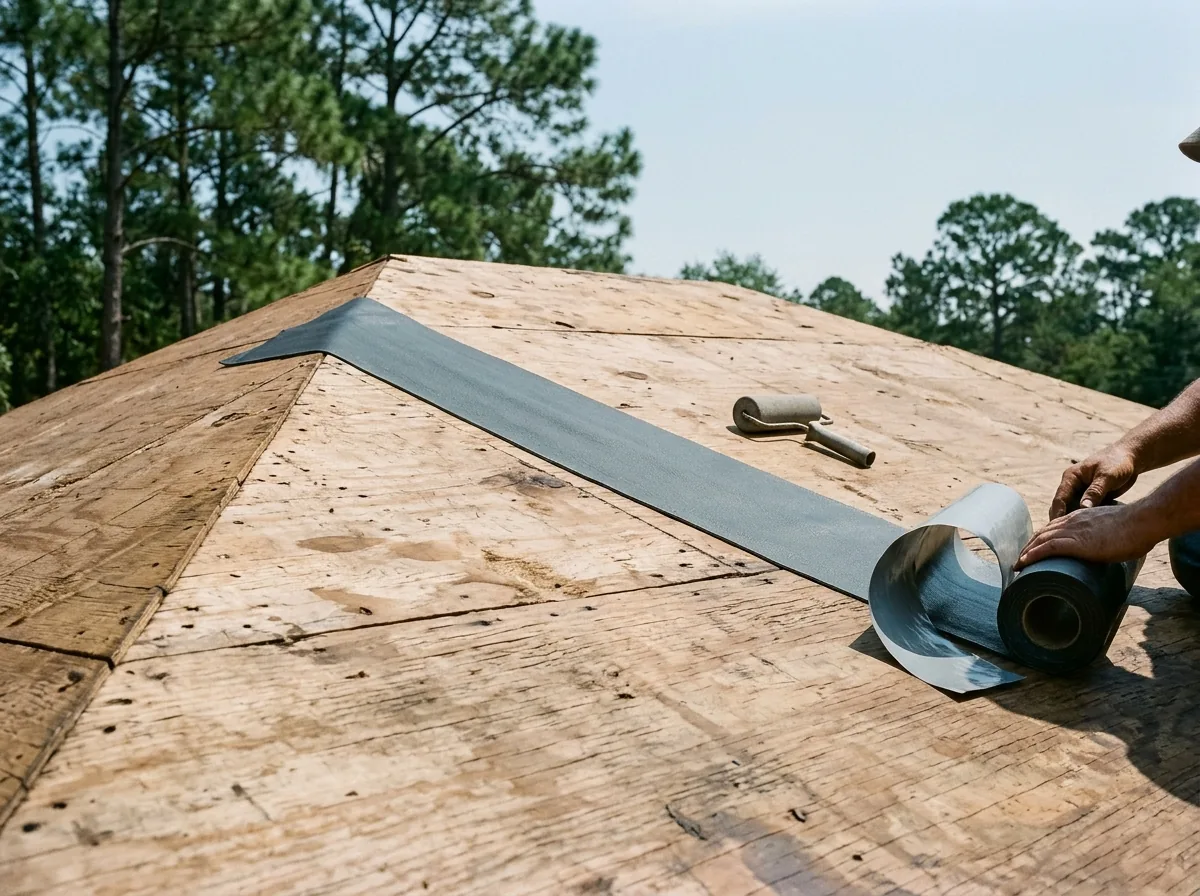
Secondary Water Barrier (Sealed Roof Deck)
A sealed deck keeps rain out after the shingles blow off. The form accepts three methods, the same three the Florida Residential Code (R905.1.1.1, 2023 8th edition) lists for shingle underlayment:
- Full-deck membrane: self-adhering polymer-modified bitumen underlayment (ASTM D1970) over the entire deck.
- Taped seams: 3-3/4-inch self-adhering strips over every deck joint, with felt or synthetic underlayment over the whole roof.
- Two layers: ASTM D226 Type II, D4869 Type III or IV, or D8257 underlayment, half-lapped.
Standard underlayment and hot-mopped felt don't count. On a house first permitted before the Florida Building Code, R908.7.2 requires a secondary water barrier whenever the covering is torn off and replaced. A tile roof installed to the residential code already counts as compliant.
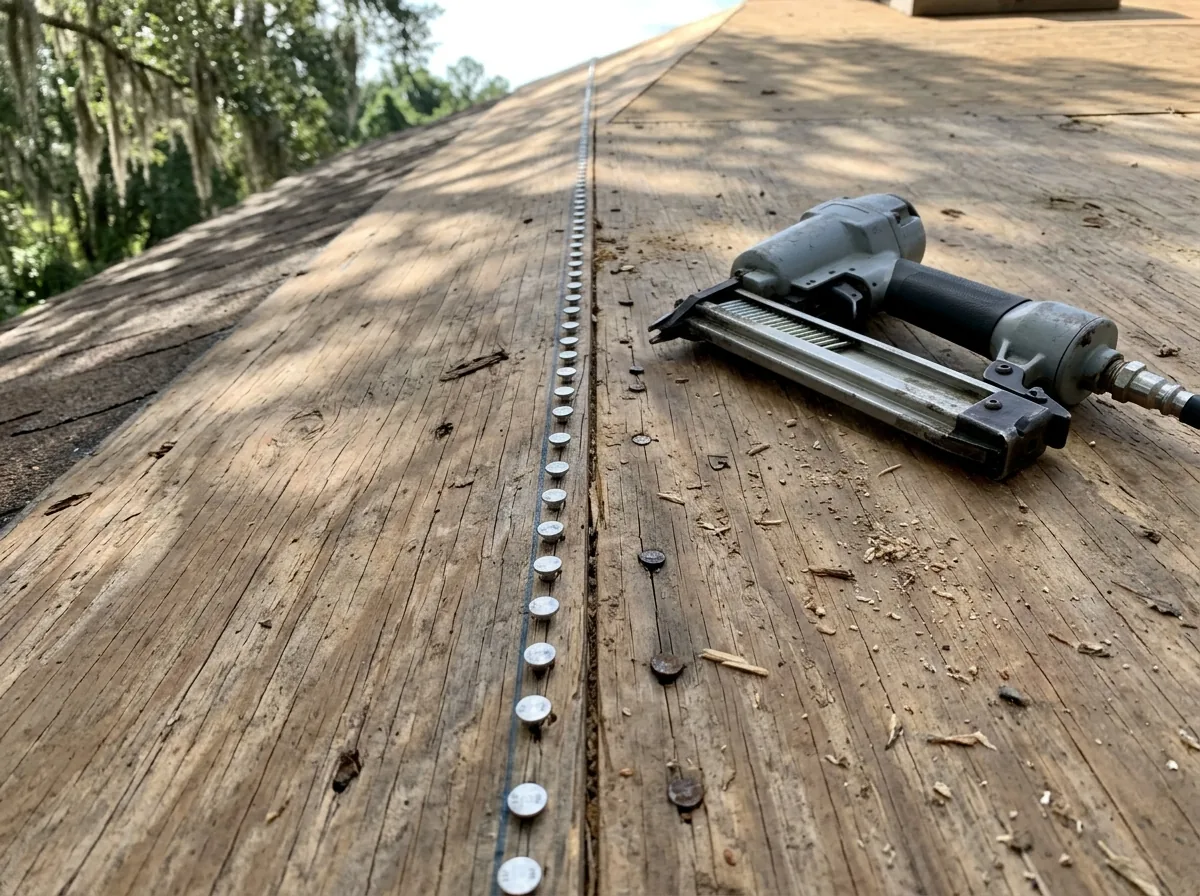
Roof Deck Attachment (Re-Nailing)
The inspector records the weakest deck fastening found in the attic. On the form, staples or 6d nails at 6 inches on the edges and 12 in the field count as level A (about 55 psf of uplift resistance). 8d nails at 12 inches in the field count as B (103 psf), and 8d nails at 6 inches in the field count as C (182 psf). The inspector needs attic access to see it. On older homes the reroof code requires supplemental ring-shank nails. The nail size and spacing are on the roof decking replacement page.
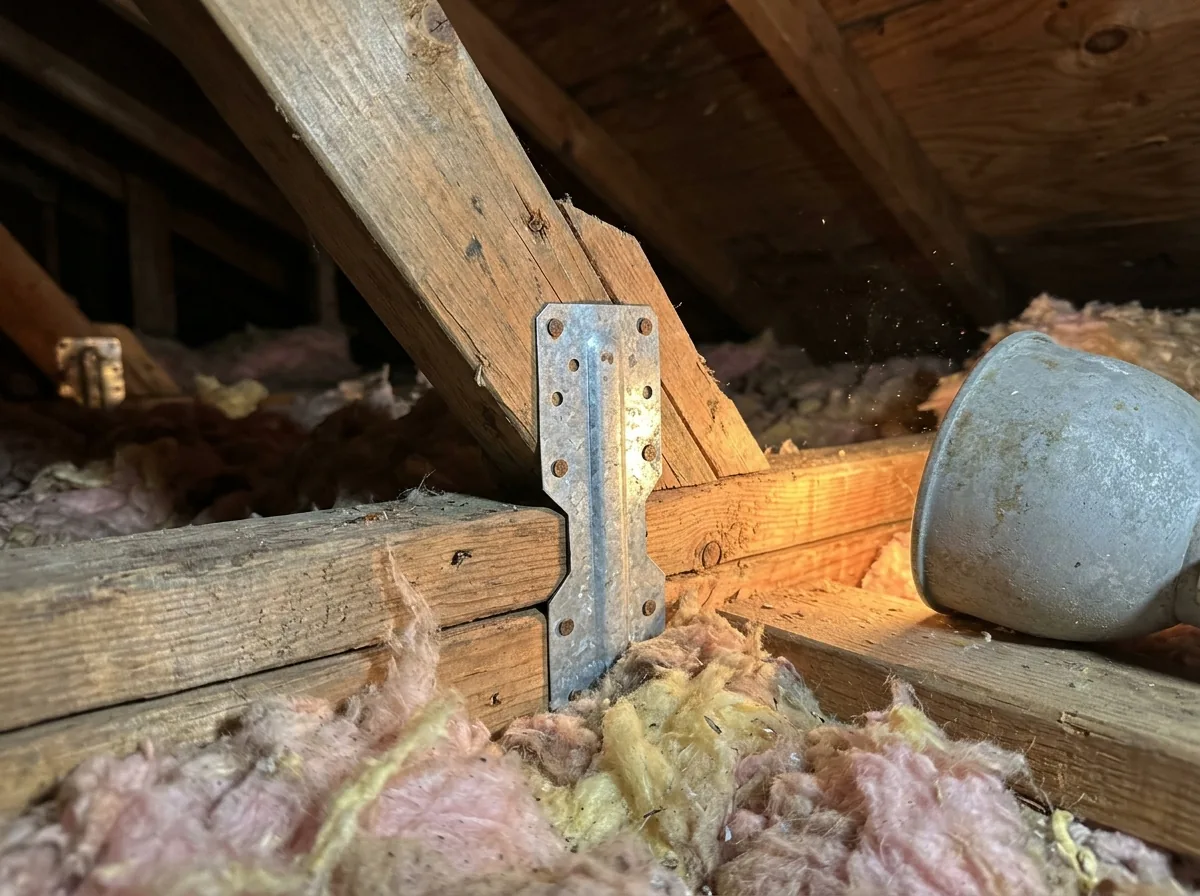
Roof-to-Wall Connections: Clips, Single Wraps and Double Wraps
The form's levels run from toenails, the weakest, to clips, single wraps and double wraps (straps on both sides of the truss), with minimum nail counts set for each level. Hip and valley jacks within five feet of a corner don't count when the inspector judges the weakest connection. My Safe Florida Home's estimator puts a clip retrofit at $2,400 to $5,800. Tallahassee isn't in the code's wind-borne debris region: its design wind speeds of 115 to 120 mph are below the 130 and 140 mph triggers. So R908.8's mandatory roof-to-wall retrofit at reroof doesn't apply here, and clips are optional work you'd add for the credit.
Roof Covering That Meets the Florida Building Code
The covering gets credit with a permit application dated on or after March 1, 2002, a Florida or Miami-Dade Product Approval current at installation, or an original roof on a house built in 2004 or later. Keep the permit and product approval number from your reroof. The wind class to look for on the shingle bundle is explained on the architectural shingle roofing page.
Roof Shape: Hip vs. Gable
A roof counts as hip when other shapes make up no more than 10% of its perimeter. Porch and carport roofs fastened only to the fascia or wall over open space aren't counted. Changing the shape means reframing the house, so treat this box as something the form records, not an upgrade to buy.
Why Tallahassee homeowners call Tallahassee Expert Roofing
- Your request reaches one roofer, never a call list
- Homeowners pay nothing to use this line
- Ask for the shingle wind class and Product Approval number in writing
- The roofer's estimate is free and you're not obliged to hire
Who Signs the Wind Mitigation Form (OIR-B1-1802)
The current form is Rev. 04/26, and Citizens has required it since April 1, 2026. Only a qualified inspector under Fla. Stat. 627.711(2) may certify it:
Home inspector
licensed under 468.8314, with the required hurricane mitigation training and a proficiency exam.Building code inspector
certified under 468.607.General, building or residential contractor
licensed under 489.111.Professional engineer or architect
licensed under 471.015 or 481.213.Others
anyone your insurer recognizes as qualified.
A roofing-only license isn't on that list. Every attribute marked in questions 2 through 9 needs at least one photo or document as proof. So hand the inspector the roofer's records: the permit, the product approval number and dated photos of the re-nailing and sealed deck, the two steps City and County inspectors check (codes 115 and 116) before the covering goes on. Filing a false form to get a discount is a first-degree misdemeanor.
My Safe Florida Home: How the Roof Grant Works in 2026
On October 29, 2026, the program's support center said it was accepting applications through its Neighborly portal, after a prioritization questionnaire. The rules that matter for roof work:
Free initial inspection by the program's own inspector
You can't use your own. Only upgrades that inspection recommends, and that the final inspection sees, get funded.Who qualifies for a grant
A site-built, owner-occupied single-family home with a homestead exemption, built before January 1, 2008, and insured for $700,000 or less.Your contractor
Any Florida contractor licensed as a general, building, residential, specialty or roofing contractor. You enter the license number, and the program checks it.Money
$2 from the state for every $1 from you, up to $10,000. Low-income grants up to $10,000 need no match.Order
Approval first, then construction. Work started early disqualifies the job. Finish and request the final inspection within 18 months.
Funding depends on each year's legislative appropriation, so check the program's status (850-427-2559) before you schedule a reroof around it.