
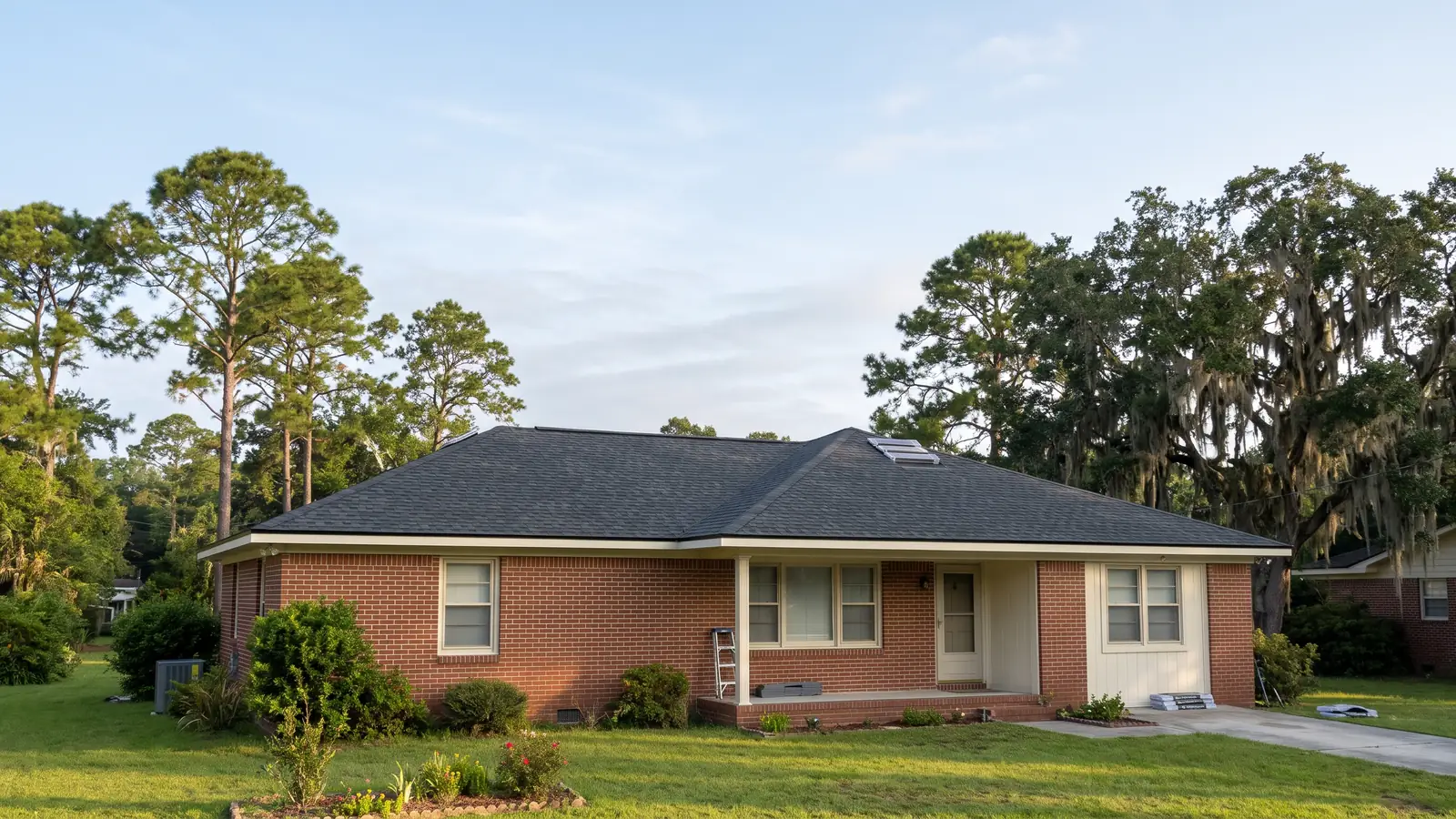
Storm Damage Roof Types in Tallahassee
Tornadoes, hurricanes and falling trees have all damaged Tallahassee roofs in the past decade. The damage usually falls into one of three kinds, and each one needs different evidence for a claim.
Wind-Lifted and Creased Shingles
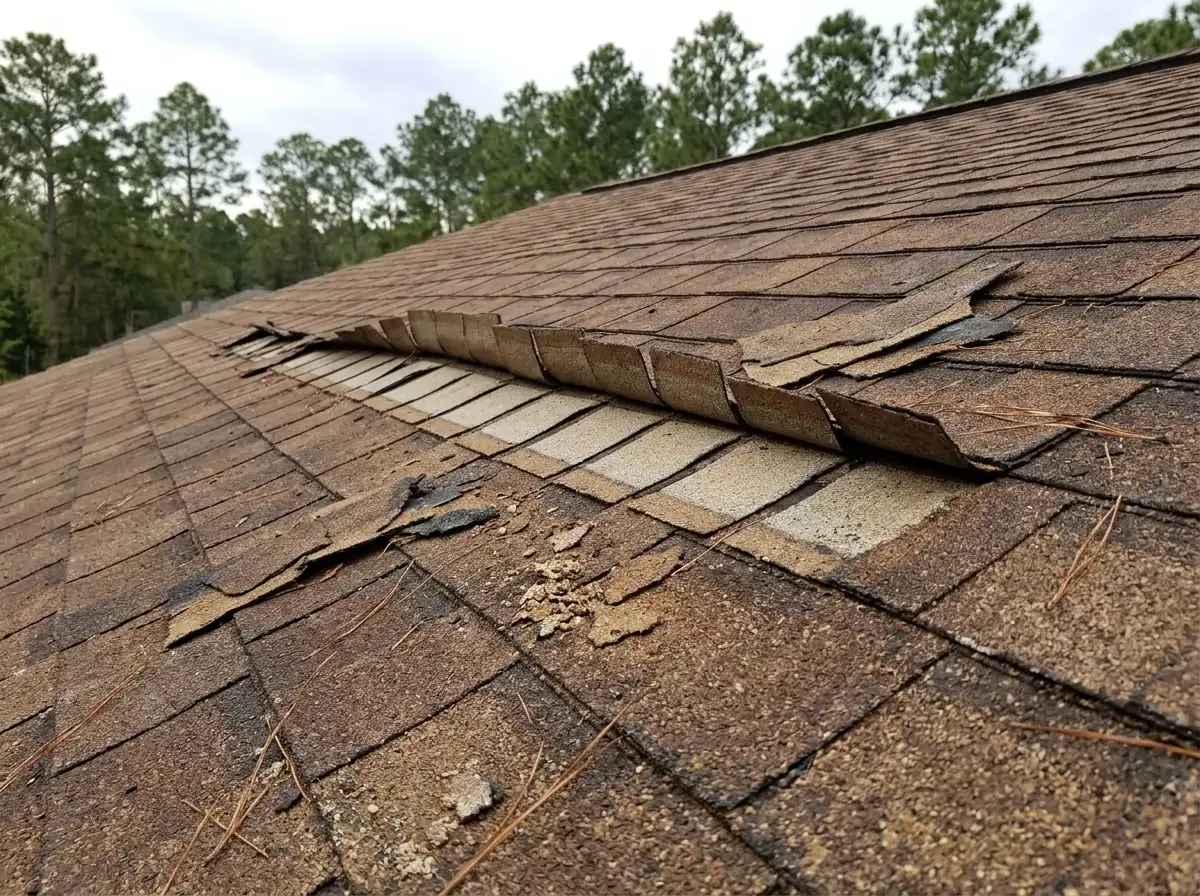
A creased shingle has been folded back by wind and no longer lies flat. From the ground the roof can look fine. On May 10, 2024, the National Weather Service rated one tornado that crossed Tallahassee at EF2, 115 mph, with roof and siding damage to a hotel and shopping center near Capital Circle Northwest and U.S. 90. Hurricane Hermine in 2016 put a 64 mph gust through Doak Campbell Stadium. Ask the roofer to lift-test tabs on each slope, not just the obvious ones. Smaller patches like this are priced on the roof repair page.
Fallen Limbs and Tree Strikes
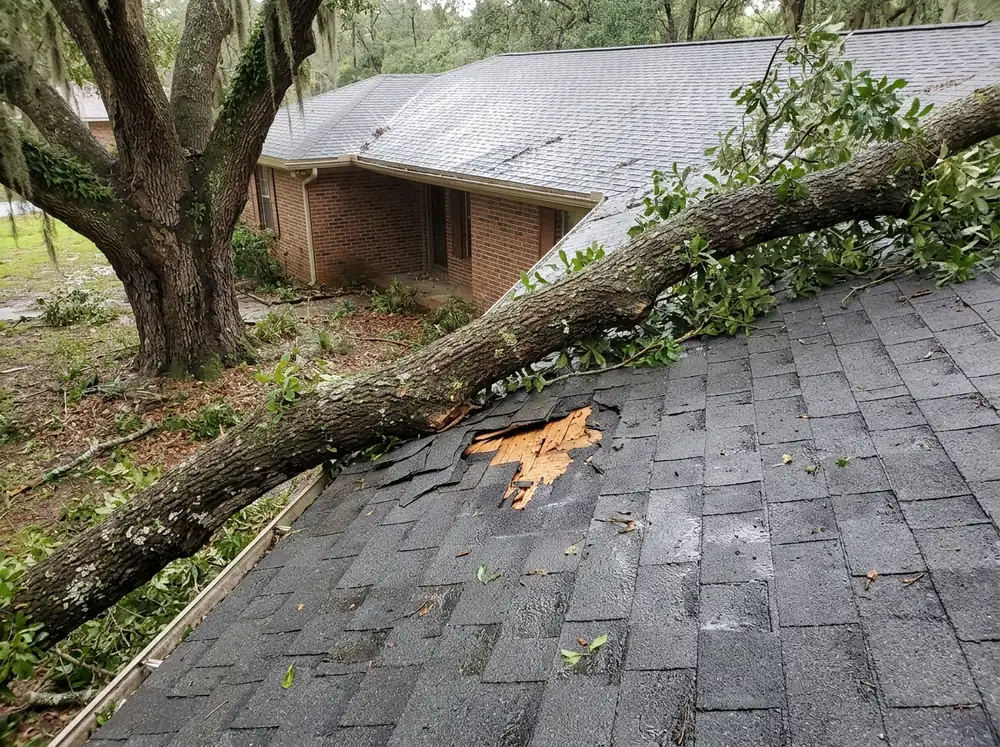
Trees cover 55% of the city's land, by the City's Urban Forest Master Plan, and many are water oaks, which the plan describes as short-lived. A limb can puncture the decking and crack a rafter or truss. Leon County's post-storm guide says structural repairs to rafters, trusses and walls need a permit, as do roof repairs over 100 square feet. The tree comes off before anything else; emergency roof tarping covers that first day.
Water Intrusion After Hurricanes and Tropical Storms
Some storm damage is rain getting in through a roof that held. When Hurricane Helene came ashore in Taylor County as a Category 4 on September 26, 2024, the Weather Service measured 12 to 14 inches of rain west of Tallahassee. Ask whether any wet insulation or decking needs replacing rather than drying out. HomeGuide puts leak repairs with water damage at $1,000 to $6,000 or more. Hurricane Michael in 2018 left more than 110,000 City of Tallahassee customers without power.
Why Tallahassee homeowners call Tallahassee Expert Roofing
- Your request reaches one roofer, never a call list
- Homeowners pay nothing to use this line
- Ask for the shingle wind class and Product Approval number in writing
- The roofer's estimate is free and you're not obliged to hire
Storm Damage Claim Steps, in Order
- STEP01
Report the Claim
Call the insurer, or file online, as soon as you're safe. Florida bars a new or reopened claim not reported within 1 year of the date of loss, and a supplemental claim after 18 months (Fla. Stat. 627.70132). For a hurricane the date of loss is landfall; for a tornado, windstorm or severe rain, it's the date NOAA verifies the event.
- STEP02
Photograph Before Anything Is Moved
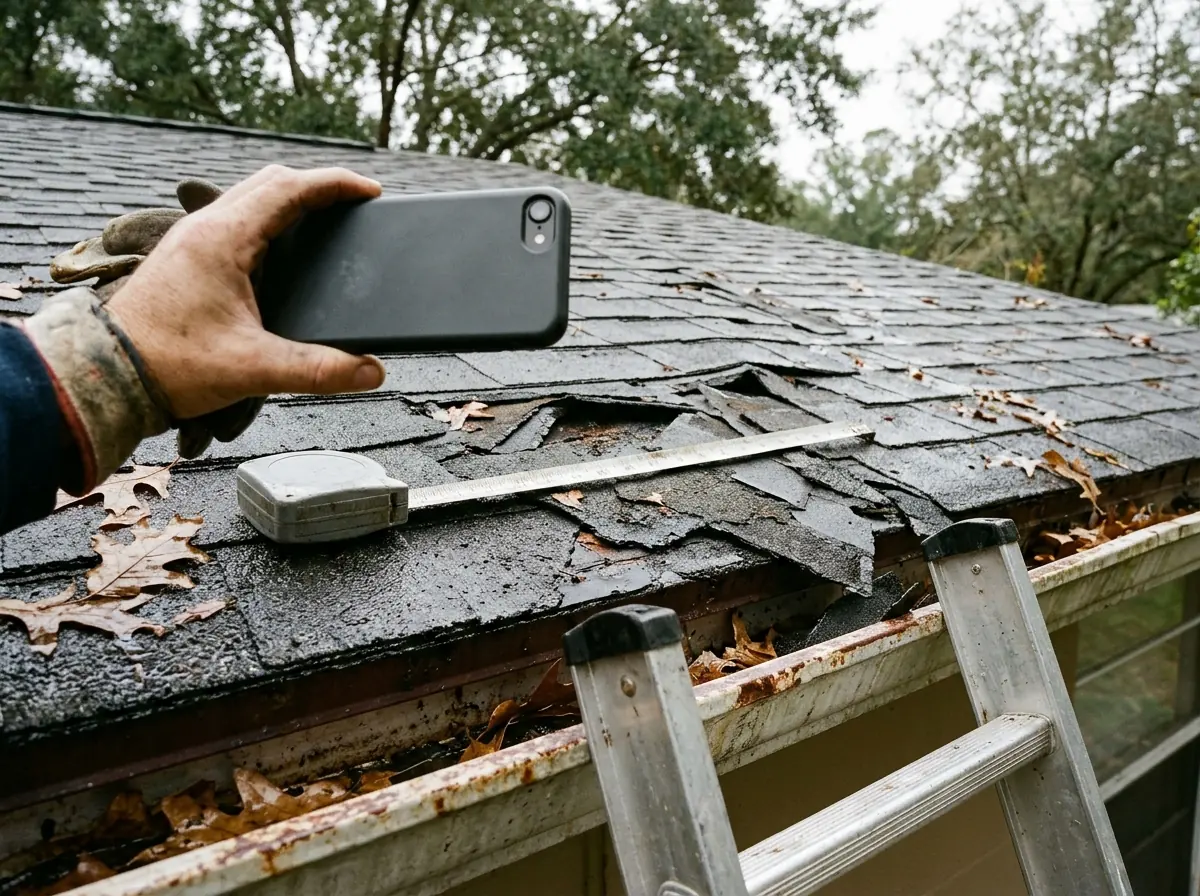
Take wide shots of every slope from the ground, close-ups of damage with a tape measure for scale, and every ceiling stain inside. Do this before a tarp goes on or a limb is cut up. Keep receipts for tarps and tree work.
- STEP03
The Adjuster's Visit
The Attorney General's storm alerts advise letting the insurer evaluate the damage before you arrange repairs, so the work is covered. Be home for the visit, walk the adjuster through your photos, and ask for the written estimate the insurer prepares.
- STEP04
Written Scope and Itemized Estimate
Florida requires a contractor to give you a good-faith, itemized estimate of services and materials before you sign an agreement authorizing claim repairs (Fla. Stat. 489.147). The Attorney General suggests getting at least three written, itemized estimates. Compare them against the adjuster's scope line by line.
- STEP05
Repair, Permit and Final Payment
Work over 100 square feet needs a permit; roof replacement lists both offices and the deposit rule. Before the last check, collect lien releases from subcontractors and suppliers, and don't sign a certificate of completion until you're satisfied, the Attorney General advises.
What Florida Law Bars Roofers From Offering
Florida writes its storm-contracting rules into Fla. Stat. 489.147. A roofer who breaks them can be fined up to $10,000 per violation. The section bars a contractor from:
Inducements
Offering a rebate, gift, gift card, cash, coupon, deductible waiver or anything of value for letting it inspect your roof or for filing a claim.Advice about your claim
Interpreting your policy, advising you on coverage, or adjusting the claim on your behalf, unless it holds a public adjuster license.Unmarked ads
Ads urging you to call about a roof claim must state, in a set type size, that you pay your own deductible and that waiving or rebating one is a third-degree felony.
Every residential roof contract must carry a notice of those limits. If the contract was signed within 180 days of a Governor-declared emergency covering your area, you can cancel within 10 days of signing or by the official start date, whichever comes first, without penalty.
Two more rules close the old loopholes. Under Fla. Stat. 627.7152, a home or commercial policy issued on or after January 1, 2023 can't be assigned to a contractor after a loss, so "sign here and we'll deal with the insurer" isn't an option. And the Attorney General warns that after a disaster, qualified contractors get booked up for months and that scammers or unqualified out-of-state workers may flood in. Check any storm roofer's state license, as roof repair explains, and report price gouging during a declared emergency to 1-866-9NO-SCAM.