
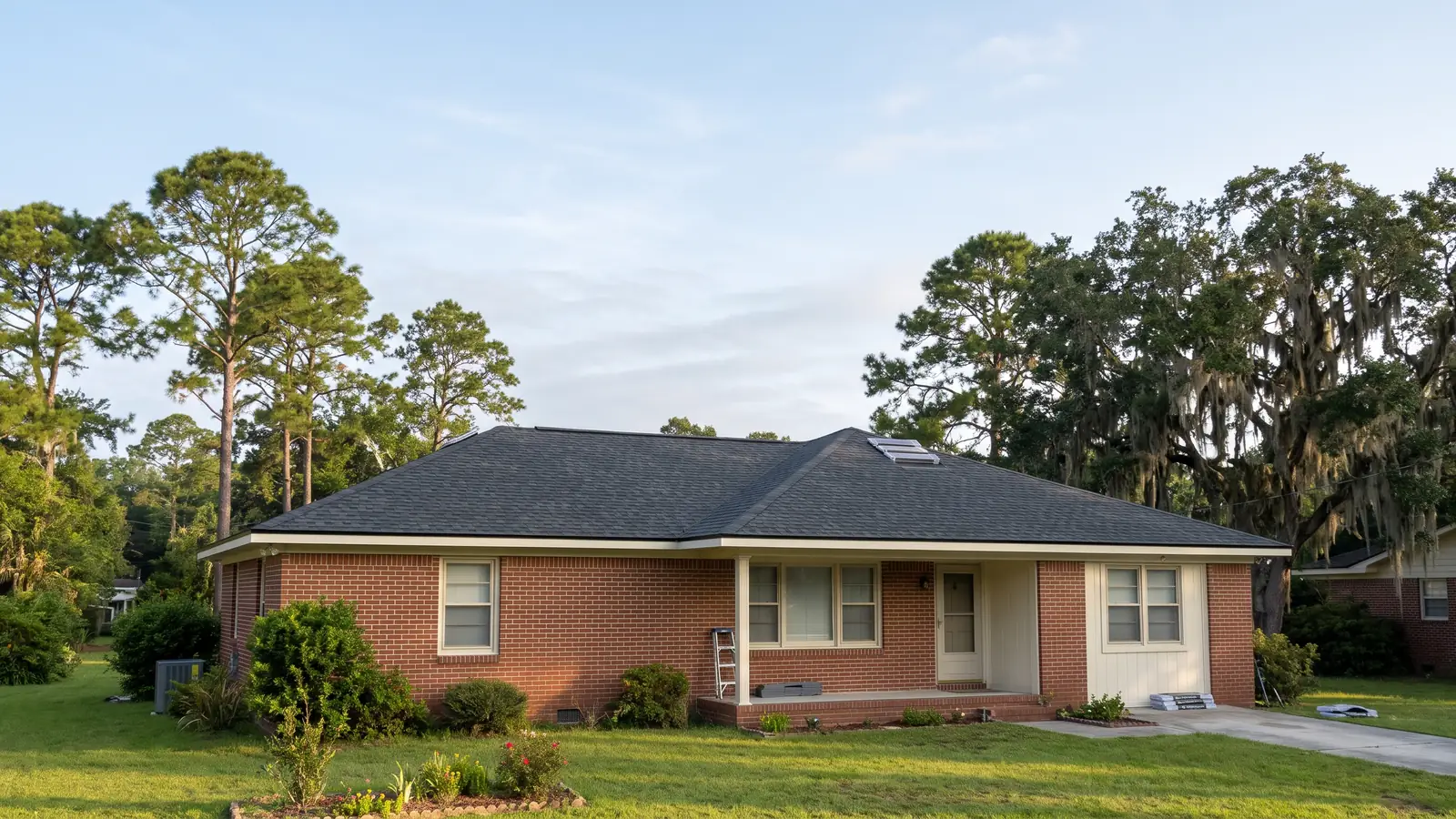
Roof Repair Types: Where Tallahassee Roofs Leak
Most repair calls trace back to one of a handful of spots. Each one has its own fix and its own price.
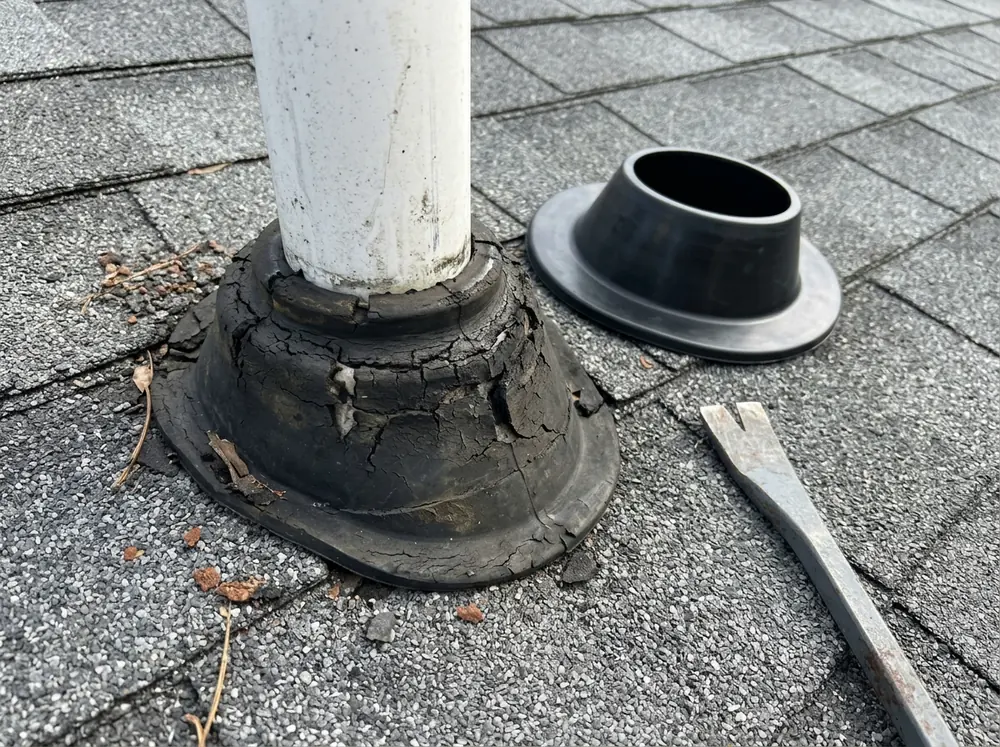
Pipe and Vent Boots
A boot is the plastic, metal or rubber collar that seals a plumbing vent where it comes through the roof. When the seal splits, water runs down the pipe into the attic. HomeGuide puts a boot replacement at $75 to $150, and a fuller repair of the pipe flashing, including re-sealing the cap, at $200 to $500. Ask which of the two your quote covers.
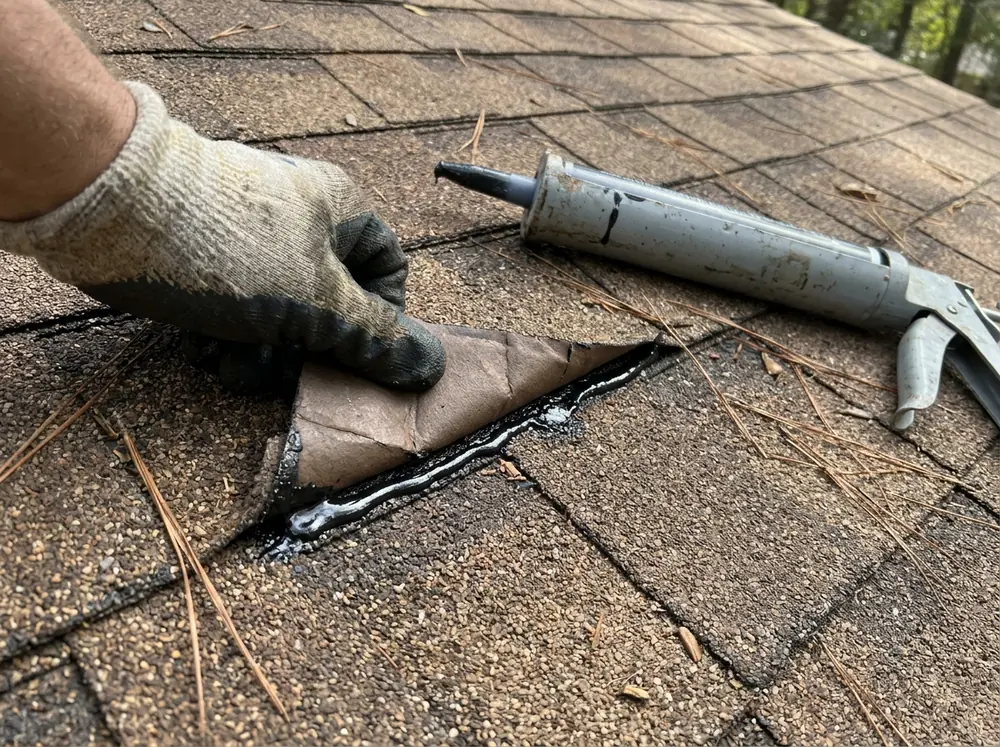
Lifted, Creased or Missing Shingles
A tab that has lifted and creased no longer seals, so wind-driven rain gets under it. HomeGuide lists missing-shingle repairs at $100 to $300 for up to 25 shingles, or $350 to $1,000 per 100 square feet; Angi gives $100 to $700 for shingle replacement. Replacement shingles still have to carry a wind class the code accepts for Leon County, which the architectural shingle page sets out. Damage from a named storm belongs with storm damage roof repair, where the insurance steps are.
Wall and Chimney Flashing Leaks
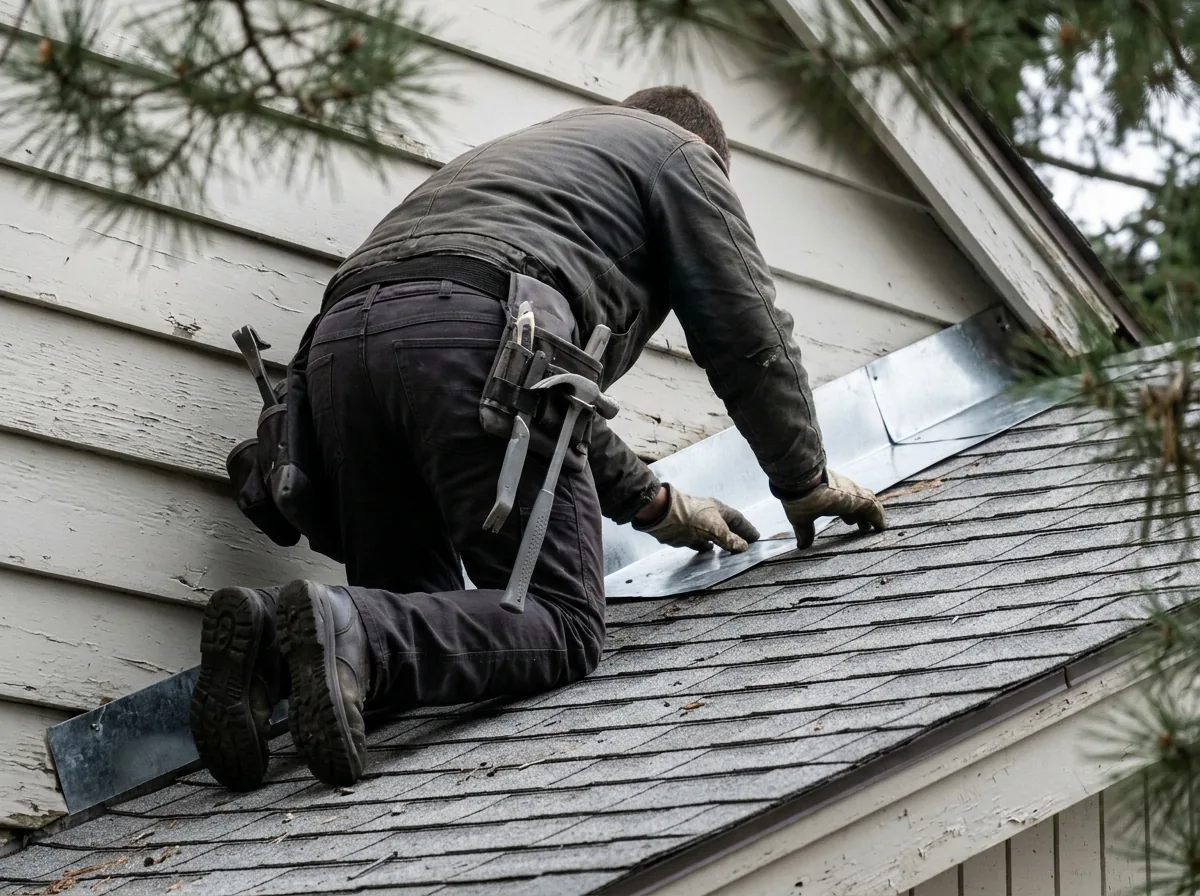
Where a roof meets a wall or a chimney, the step and counter flashing do the sealing, and HomeGuide prices flashing repairs at $200 to $500. Roof flashing repair covers each flashing type.
Valley Leaks
A valley is the trough where two slopes meet, so it carries the runoff from both. Under Tallahassee's pines and oaks it also catches needles and leaves. HomeGuide puts a valley replacement at $200 to $850; Angi's range is $300 to $1,000. The fix usually means lifting the shingles on both sides, replacing the valley lining and re-laying them.
Nail Pops and Exposed Fasteners
The Florida Residential Code calls for shingle nails of at least 12 gauge with a 3/8-inch head, long enough to go 3/4 inch into the sheathing (R905.2.5). Nail heads that have risen under a shingle (nail pops) or sit bare on ridge caps and flashing need resealing or replacing. Ask whether the new nails meet that length, and have the roofer check the nearby courses for more of the same.
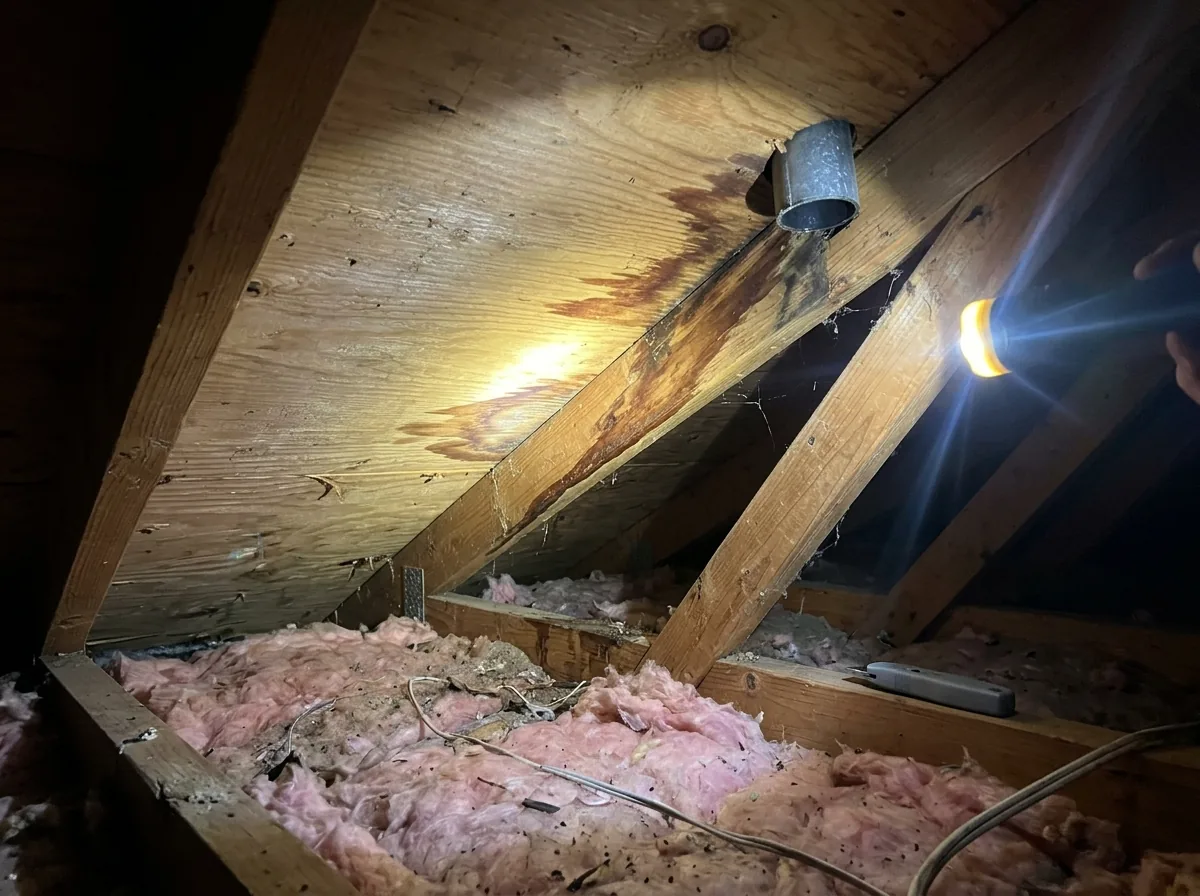
Leak Tracing When the Source Isn't Obvious
The stain on the ceiling is where water stopped, not where it got in. Angi notes that leaks often run along trusses before they drip onto the ceiling, and it puts stopping a leak at $150 to $2,000, depending on the source. A good roofer starts in the attic, follows the water stains on the decking uphill, then checks the boots, flashing and valleys above that point. Budget separately for the inside: HomeGuide lists ceiling repair at $500 to $2,500.
Why Tallahassee homeowners call Tallahassee Expert Roofing
- Your request reaches one roofer, never a call list
- Homeowners pay nothing to use this line
- Ask for the shingle wind class and Product Approval number in writing
- The roofer's estimate is free and you're not obliged to hire
Repair or Replace: Florida's 25% Roof Rule
Florida decides for you once a repair gets big enough. Under the Florida Building Code, Residential (8th edition, 2023), no more than 25% of a roof's total area or of one roof section can be repaired, replaced or recovered in any 12-month period. Go past that, and the covering on the whole roof or section must be replaced to current code (R908.1.1).
The exception helps newer roofs. If the roof or section was built, repaired or replaced under the 2007 Florida Building Code or any later edition, only the part being worked on has to meet the code in force. Fla. Stat. 553.844(5) bars cities and counties from amending that exception, so the City of Tallahassee and Leon County apply it the same way.
In practice:
Measure first
On a 30-square roof (3,000 square feet), 25% is 7.5 squares in 12 months, counting earlier repairs in that window.Find the roof's permit date
A roof permitted under the 2007 code or later gets the exception; an untouched 1990s roof doesn't. The permit office can tell you the date and edition.Run the numbers
HomeGuide's rule of thumb favors repair when less than 25% of the roof is damaged, the repair costs under 30% of a new roof, and the roof is under 20 years old.
Above 100 square feet, a repair also needs a permit; roof replacement lists both permit offices and their fees.
Checking a Roofer's License Before a Repair
Anyone contracting for roofing in Florida must be certified or registered by the state (Fla. Stat. 489.113). The Department of Business and Professional Regulation (DBPR) codes certified licenses with a C and registered ones with an R, so a roofing contractor's license reads CC or RC:
CC (certified roofing contractor)
Valid anywhere in Florida.RC (registered roofing contractor)
Valid only in the local jurisdictions where the contractor met competency rules, and the contractor must report each one to the state board (Fla. Stat. 489.117).
To check, enter the name or license number on DBPR's Verify a Licensee page at myfloridalicense.com and confirm the status is current. A general contractor without a roofing license has to subcontract the roofing to someone who holds one. A contract with an unlicensed contractor can't be enforced by that contractor (Fla. Stat. 489.128), but that's little comfort once the deposit is gone, so check before anyone climbs a ladder.