
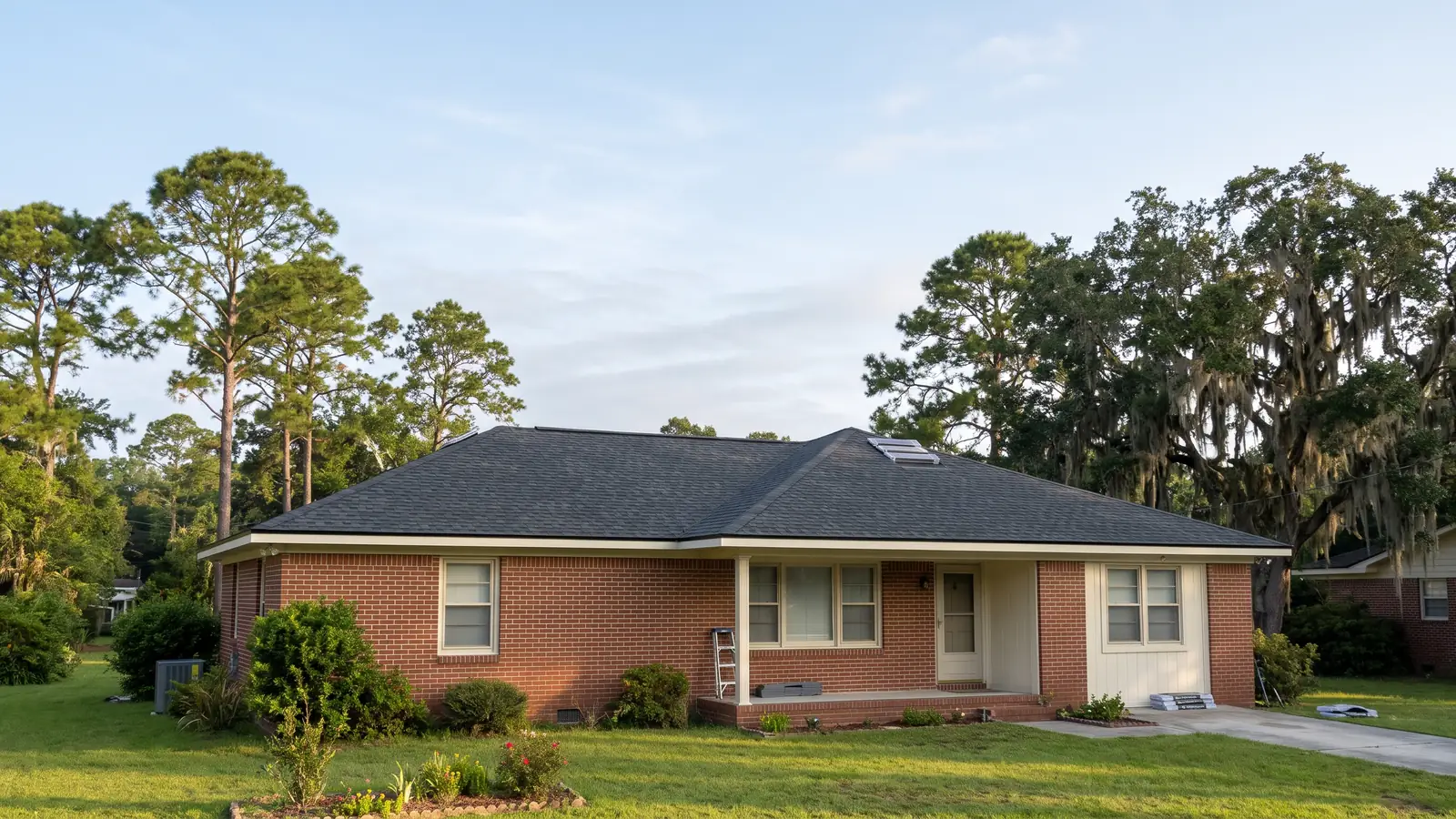
Roof and Chimney Flashing Repair Types
Flashing is the sheet metal (sometimes membrane) that seals the roof where it meets a wall, changes direction or has a hole cut through it. The Florida Building Code, Residential, 8th edition, requires it at all three (R903.2.1) and sets minimum metal thickness: 0.024 inch for aluminum, 26-gauge G90 for galvanized steel, 16-ounce for copper (Table R903.2.1). HomeGuide lists water stains near chimneys, skylights and valleys as the usual first sign of failure. Plumbing vent boots are a separate, cheaper repair on the roof repair page.
Chimney Step and Counter Flashing With Crickets
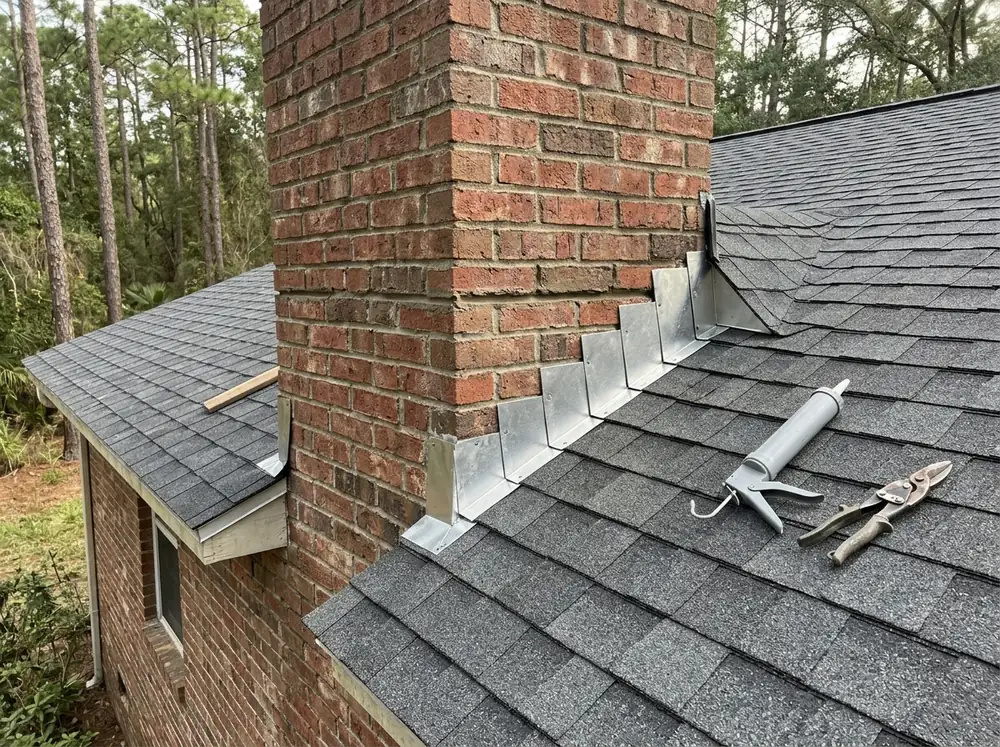
A chimney gets three layers. Base flashing wraps the low side, step flashing weaves into the shingle courses up each side, and counter flashing is set into the mortar joints and laps down over the steps. Florida's code allows corrosion-resistant metal or 77-pound mineral-surfaced roll roofing for the base and requires metal for the counter flashing (R905.2.8.1). Any chimney more than 30 inches wide also needs a cricket, a small peaked saddle on the uphill side that splits water around it (R903.2.2).
- Small chimney: $300 to $1,200
- Mid-sized: $400 to $1,500
- Large: $500 to $1,800
- Reseal of small cracks or lifted edges only: $200 to $500
Labor is 60% to 70% of the bill. If the mortar the counter flashing sits in is crumbling, that's masonry work, so ask whether the quote includes repointing or leaves it to a mason.
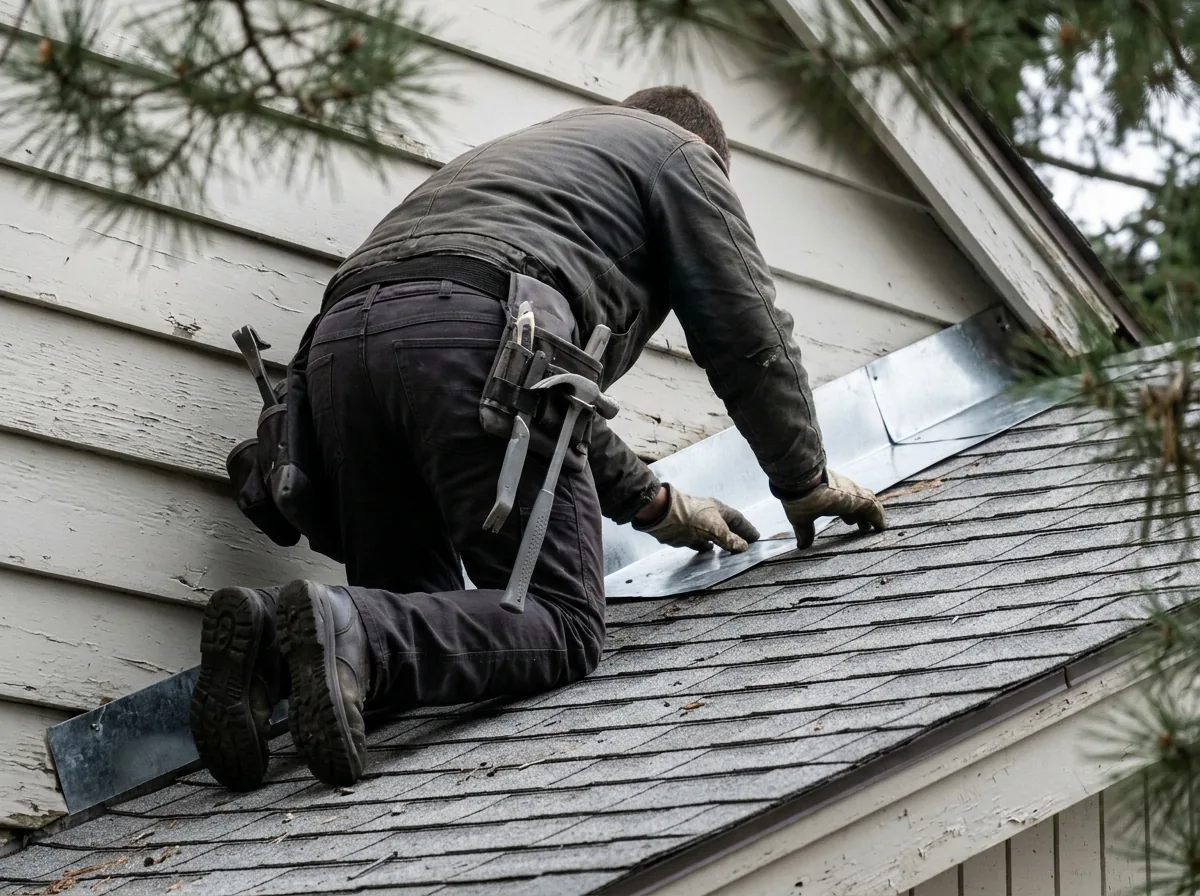
Sidewall Step Flashing
Where a roof slope runs along a wall, as at a dormer or a second-story wall over a porch, R905.2.8.3 calls for either step flashing or a continuous "L" flashing. The L option is spelled out in R905.2.8.1: at least 4 by 4 inches, set in flashing cement, fastened 6 inches apart, with 4-inch sealed laps starting at the bottom. HomeGuide prices dormer flashing at $250 to $1,000. The upturned leg belongs behind the wall's house wrap, so the siding or stucco along that wall gets opened. Ask who repairs the wall finish.
Kick-Out Flashing
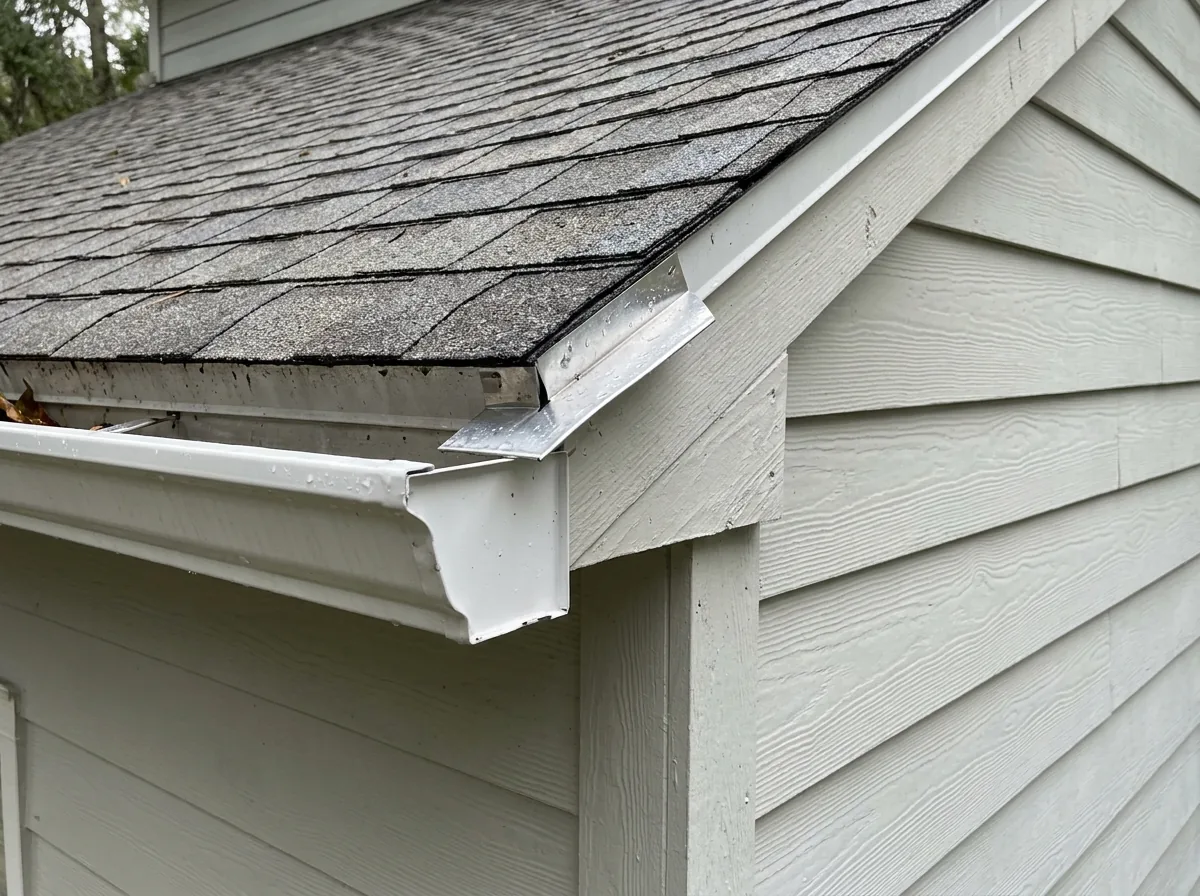
A kick-out is a small angled diverter at the bottom of a roof-wall joint that pushes water into the gutter instead of down the face of the wall. Florida's shingle sidewall rule doesn't name it, but the Department of Energy's Building America Solution Center calls it a critical part of step flashing. For hurricane-prone areas, the guide recommends self-adhered flashing under the steps and a kick-out at the eave. Where one is missing, the guide says to inspect the wall below the eave for water damage and repair it.
Valley Flashing: Open or Closed
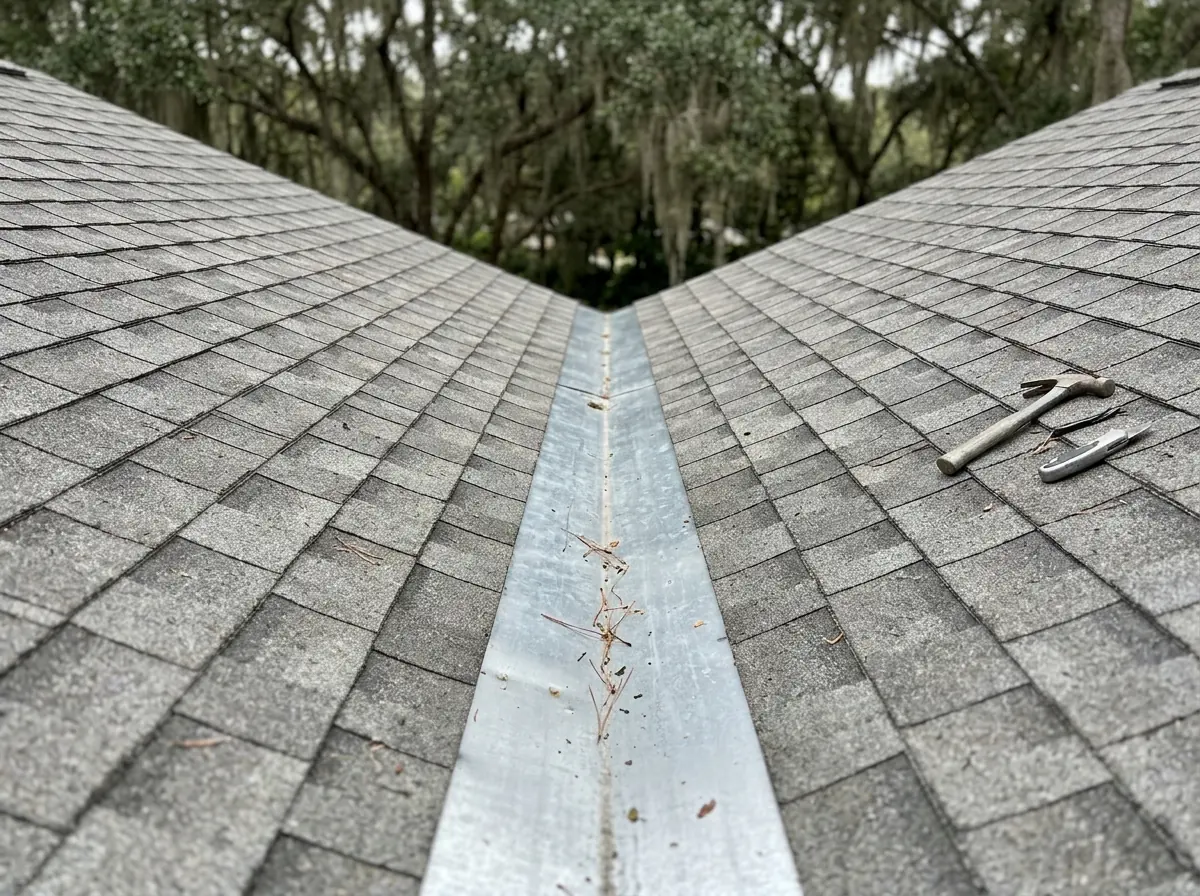
An open valley leaves a metal lining exposed down the middle; a closed valley runs shingles across it. The code minimums differ (R905.2.8.2):
- Open, metal-lined: lining at least 16 inches wide
- Open, roll roofing: two plies, 18 and 36 inches wide
- Closed: one 36-inch ply of smooth roll roofing, or 36-inch self-adhering membrane (ASTM D1970)
A valley channels the runoff from two slopes, and HomeGuide lists valley flashing repair at $200 to $850.
Drip Edge
Drip edge is the bent metal strip at the eaves and rakes. Florida's code requires it on every shingle roof (R905.2.8.5). The rule in full:
- At eaves and gables, laps at least 3 inches
- Eave edge extends ½ inch below the sheathing and 2 inches back onto the roof
- Installed over the underlayment, with a 4-inch strip of roof cement over the flange
- Fastened every 12 inches, or every 4 inches where the design wind speed (Vasd) is 110 mph or more or the roof is over 33 feet tall
Which spacing applies depends on the design wind speed, covered for Leon County on architectural shingle roofing. HomeGuide says adding drip edge to an existing roof costs about three times as much as installing it during a reroof, and more again if the bottom shingle course needs replacing.
Why Tallahassee homeowners call Tallahassee Expert Roofing
- Your request reaches one roofer, never a call list
- Homeowners pay nothing to use this line
- Ask for the shingle wind class and Product Approval number in writing
- The roofer's estimate is free and you're not obliged to hire
Roof Flashing Repair Cost, Timeline and Reroof Rules
HomeGuide's January 2026 guide puts most flashing repairs at $200 to $500, with a $250 to $300 minimum job fee. Full reflashing runs $1,000 to $1,500 or more. Angi puts minor roof repairs at a few hours of work. Price moves with the type and location of the flashing, how much is damaged, and the roof's pitch and complexity.
At a reroof, the old metal isn't automatically reused. R908.5 bars reinstalling flashing, metal edging or counterflashing that is rusted, damaged or deteriorated. R908.6 says flashing must be rebuilt to the manufacturer's instructions or RAS 111. Leon County's reroof affidavit asks for dated photos of the flashing and drip edge for the final inspection. When you compare reroof quotes, check whether each one lists new step, counter and valley flashing and drip edge as line items. For a repair large enough to need a permit, roof replacement explains the City and County rules.