
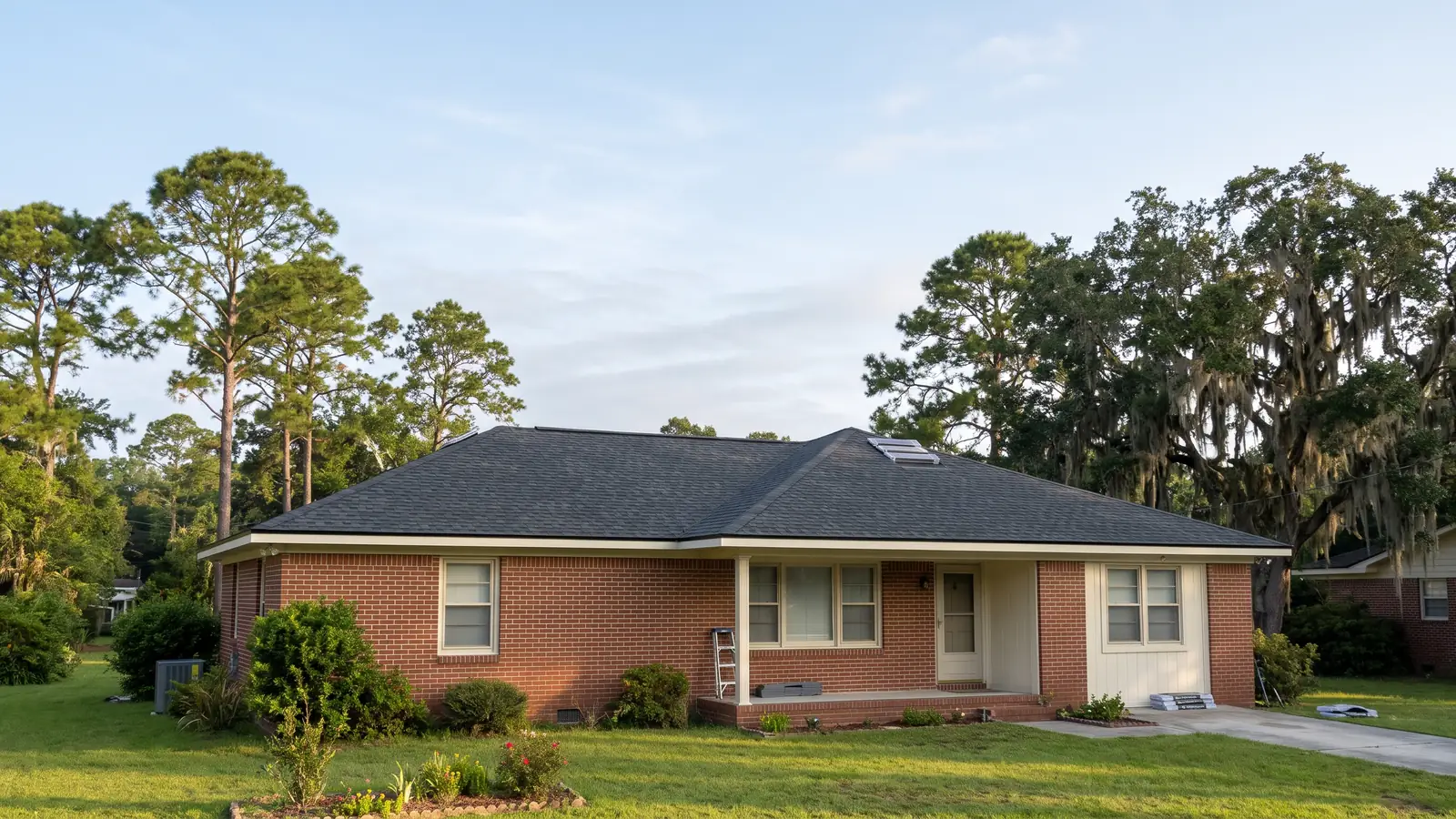
Roof and Attic Ventilation Types
Every vented attic needs intake low at the eaves and exhaust high near the ridge. Each type below is one half of that pair.
Ridge Vents
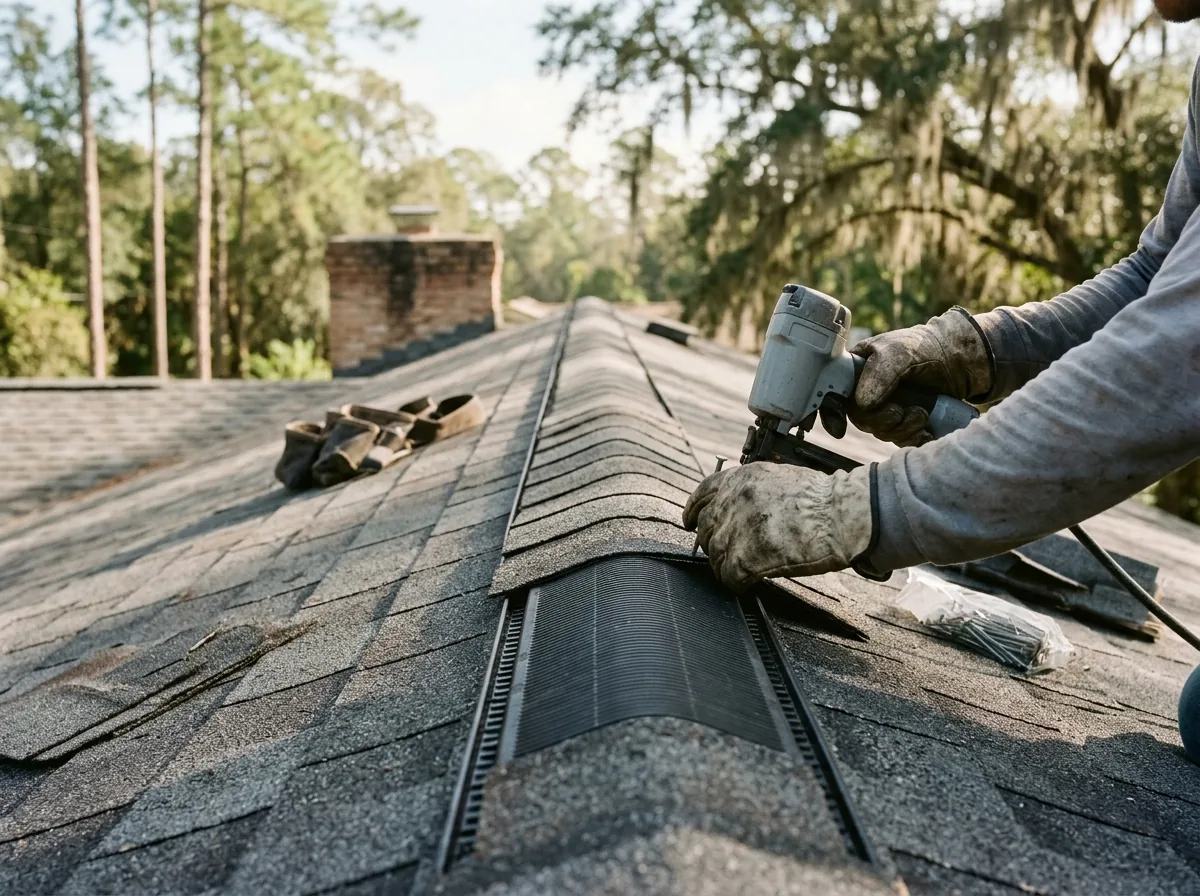
A ridge vent is a slot cut along the peak and covered with a vented cap, often one that takes cap shingles so it disappears from the street. HomeGuide calls ridge vent plus soffit intake the most cost-effective pairing for most homes.
- Installed cost: $7 to $15 per linear foot, or $350 to $600 for a typical ridge
- Vent material alone: $8 to $12 per 4-foot section
- Repair of caps, fasteners or loose shingles: $100 to $300
The slot stops short of each end of the ridge, and end caps make it look continuous. Adding the vent during a reroof saves the separate labor charge, so ask for it in the replacement quote rather than as a second job.
Soffit Intake Vents
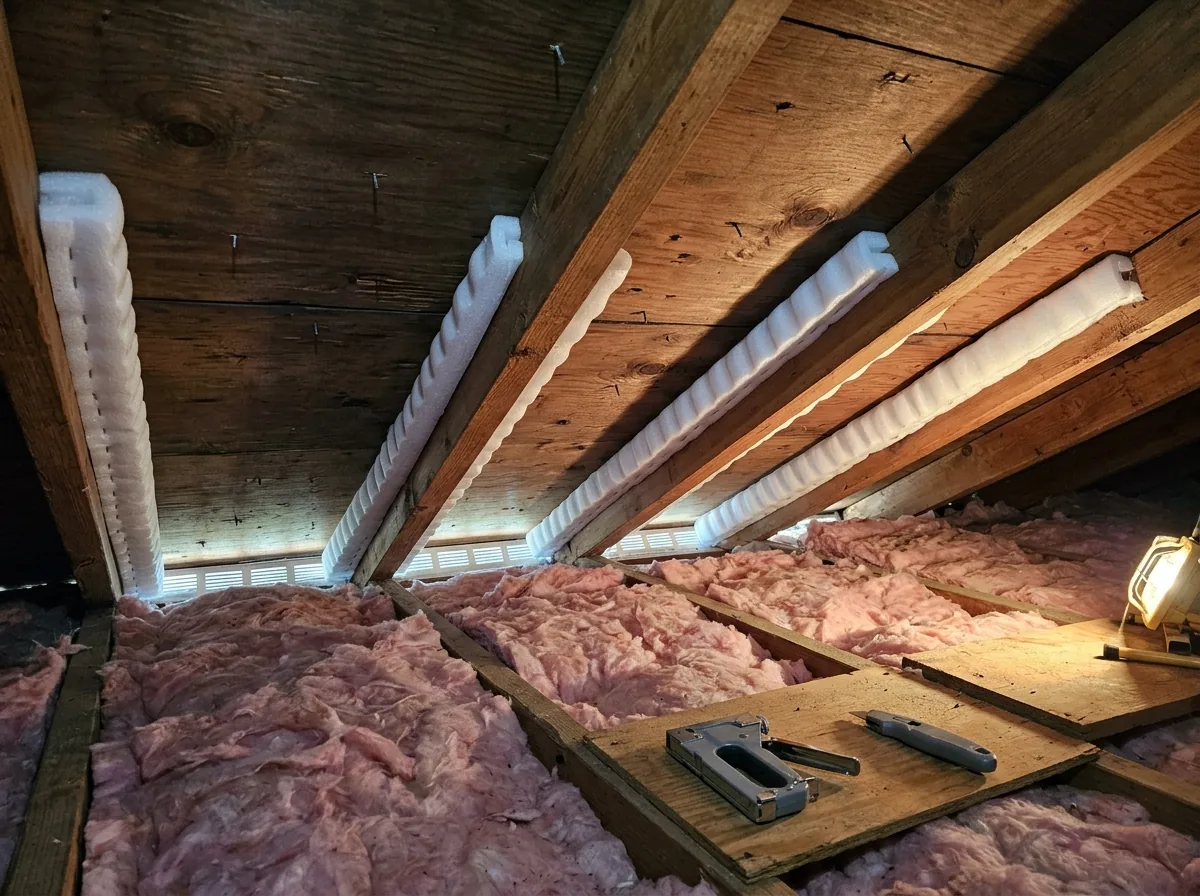
Soffit vents pull outside air in under the eaves. Without them, a ridge vent has nothing to draw from. HomeGuide puts soffit vent replacement at $300 to $650. The code requirement that matters most sits inside the attic: R806.3 requires at least 1 inch of clear space between insulation and the roof sheathing at each eave vent, which is what foam or cardboard baffles hold open. Blown insulation packed into the eaves can block intake that looks fine from the yard. Panel materials and solid versus vented soffit are covered on the soffit and fascia repair page.
Static Box Vents
Box vents (also sold as turtle or low-profile vents) are square hoods cut in near the ridge. They cost $40 to $200 each installed. HomeGuide's advice is to use them where a ridge vent isn't feasible. Each one is a hole in the roof with its own flashing, so a roof covered in them has more places to leak.
Powered and Solar Attic Fans
A roof-mounted fan exhausts attic air with a motor. HomeGuide lists $200 to $1,200 for an electric unit and $300 to $1,400 for a solar one; installation takes 3 to 5 hours, and electric models need a circuit run to the attic, with electricians at $50 to $130 an hour. Fans last 10 to 15 years.
Two warnings come with them. A fan in an attic that isn't sealed from the house can pull cooled air up through ceiling gaps, so the AC works harder. And HomeGuide says a fan shouldn't be paired with a ridge vent, because the fan can keep hot air from leaving through the ridge and can pull rainwater into the attic.
Wind Turbines
Turbines ("whirlybirds") are the only passive vent with moving parts. They cost $50 to $300 installed and work best where wind averages 5 mph or more. Like box vents, each is a separate roof penetration.
Why Tallahassee homeowners call Tallahassee Expert Roofing
- Your request reaches one roofer, never a call list
- Homeowners pay nothing to use this line
- Ask for the shingle wind class and Product Approval number in writing
- The roofer's estimate is free and you're not obliged to hire
Roof Ventilation Code Math: The R806 Ratio
Florida's residential code sets the minimum net free vent area at 1/150 of the vented attic area (R806.2, 2023 FBC Residential, 8th edition). The figure drops to 1/300 when 40% to 50% of the required area sits in the upper attic, no more than 3 feet below the ridge, and the rest is in the bottom third. For a 1,500-square-foot attic floor, that works out to:
Unbalanced layout
10 sq ft of net free areaBalanced layout
5 sq ft, with 2 to 2.5 sq ft high and the rest low at the soffits
Net free area is the open part of a vent after screens and louvers, and the product label lists it.
R806.1 also limits every opening to between 1/16 and 1/4 inch, or screens it to that size, so birds, rodents and snakes stay out. An old gable or soffit vent with torn screening fails that rule.
Why mixing exhaust types backfires
Air takes the shortest path. Put a ridge vent and a gable vent or a powered fan on the same attic, and the exhaust vents can pull air from each other instead of from the soffits, so the lower attic barely moves. HomeGuide reports that roofing experts recommend sealing existing gable vents when a ridge vent goes in. When you compare quotes, ask each one which exhaust vents stay, which get closed, and how much intake is being added to match.
A sealed, unvented attic is also allowed under R806.5, but it's an insulation project with rules of its own, not a vent swap. New vents are roof penetrations, and if the work grows past the repair permit line, roof replacement explains the City and Leon County permit offices.
Roof Ventilation Cost and Timeline
Most single-vent jobs fall in HomeGuide's $200 to $700 range, and roofers often charge a $150 to $300 minimum per visit. Steep pitch, several ridges and old vents to remove push the total up.
Fan or box vent swap
a few hours on the roof; an exact fan replacement 1 to 2 hoursRidge vent plus soffit intake
cheapest when it's added during a reroof, since the ridge is already open
HomeGuide ties attic venting to moisture control as well as heat, since trapped humid air condenses under the decking. If you aren't sure whether a stain or a hot attic is a vent problem, ask for the attic to be checked during a roof inspection before you pay for new vents.